Peptide Blog - Omizzur
Peptides and Research Chemicals Supply

In recent years, researchers have successfully created a "god-class equipment" for obesity-Semaglutide, making "losing weight" a phenomenal entry in scientific research circles. In 2024, Semaglutide approached the throne of "drug king" with sales of $29.296 billion, which promoted the rapid expansion of the polypeptide drug market. Today, let's talk about the key cornerstone behind this "slimming god"-peptides and research chemicals technology: solid-state peptide synthesis technology.
01. What is a Peptide?
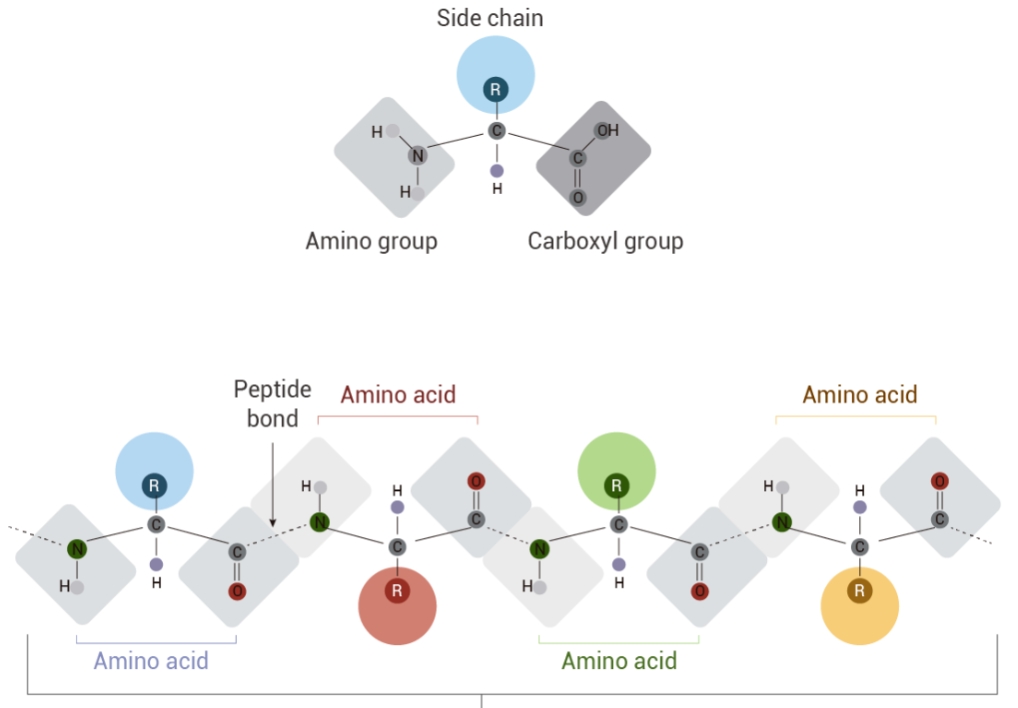
Peptide is a biomolecule with amino acid as the basic unit and connected by peptide bond, and its molecular weight is generally less than 10 KDa.
In order to understand the properties and synthesis process of peptides, it is necessary to understand the structural characteristics of amino acids first.
Amino acids are a kind of organic compounds containing both amino and carboxyl functional groups. There are 20 kinds of common amino acids in nature. A typical amino acid has a central α carbon atom, and its connecting groups include amino group (NH2), carboxyl group (COOH), hydrogen atom, and variable side chain (R group) that determines the characteristics of amino acids. When multiple amino acids are dehydrated and condensed with the amino group of the next amino acid through the carboxyl group of the previous amino acid to form peptide bonds, peptide chains are formed.
02. Function and application of peptides & research chemicals
As a "molecular building block" for building peptides, the diversity of amino acid types, sequence combinations and modifications jointly determines the diversity of polypeptide structure and function, enabling it to perform various physiological functions such as signal transduction and regulation, immune defense, enzyme catalysis, targeted recognition and transportation.
Omizzur peptides and research chemicals catalog:
| Tirzepatide | Retatrutide | Semaglutide | TB-500 |
| BPC-157 | DSIP | MOTS-c | Selank |
| Kisspeptin-10 | Epitalon | AOD-9604 | Dihexa |
| Ipamorelin | Semax | Melanotan 2 | Thymosin Alpha-1 |
| PT-141 (Bremelanotide) | Deslorelin | Salmon calcitonin | Oxytocin |
| SS-31 | Glutathione | Plecanatide | Octreotide |
| Fmoc-amino acids | Boc-amino acids | Cbz-amino acids | Unnatural amino acids |
| Amino acid derivatives | N-methyl-amino acids | peptide coupling reagents | Amino protection reagent |
| Peptide impurities | Resins |
With its diverse physiological functions, peptides synthesized by Omizzur are widely used in molecular biology, disease research, drug and vaccine development and other fields.
03. How are peptides and research chemicals synthesized?
Peptides can be obtained by biological methods (such as natural extraction, recombinant expression, etc.) or chemical methods (such as solid-phase synthesis, liquid-phase synthesis, etc.). Among them, solid phase peptide synthesis (SPPS) was invented by Bruce Merrifield (who won the Nobel Prize in Chemistry in 1984) in 1963, and it has become the most mainstream polypeptide synthesis method because of its simplicity, high efficiency and automation.
Solid-phase synthesis of peptide: C-terminal (carboxyl-terminal) of amino acid is fixed on insoluble solid resin particles through covalent bonds, and other amino acids are gradually added until the required sequence is assembled, and the polypeptide is cut off from the resin and purified.
A typical solid phase synthesis of polypeptide generally includes the following steps:
1) amino acid coupling: selecting a suitable resin to combine amino acids protected by protecting groups with the resin;
2) deprotection: removing the protective groups of amino acids and exposing active amino groups;
3) Activation and condensation: activating the carboxyl group of the next amino acid, coupling with the amino group of the amino acid fixed on the resin to form a peptide bond, and washing the newly-born peptide-resin complex with a solvent to remove unreacted substances, in which the side chain of the amino acid should be protected;
4) circulation: repeating the steps of deprotection, activation and condensation until the target peptide chain is synthesized;
5) Cleavage and deprotection: using a suitable reagent to remove the protective groups of amino acids, and cutting the polypeptide from the resin and purifying it.
At present, SPPS technology is very mature, and researchers have developed a variety of strategies, such as microwave system, new carriers and activated groups, to improve the performance of SPPS. In addition, it can also be combined with liquid phase synthesis, solid-liquid combination and other technologies to make polypeptide synthesis more flexible and efficient.
04. Detection method of peptides and reseach chemicals
High performance liquid chromatography (HPLC) is generally used to analyze the purity of peptides. The main purpose of mass spectrometry analysis is to confirm the molecular weight. At present, electrospray ionization (ESI-MS) and matrix-assisted laser desorption (MALDI-MS) are mainly used for peptide analysis.
Amino acid composition analysis can give the types and numbers of amino acids in peptides, and the basic principle of amino acid sequence analysis is Edman degradation.
The identification methods of polypeptide secondary structure include circular dichroism (CD), nuclear magnetic resonance (NMR), X- ray diffraction and so on.
In the process of solid-state synthesis, many impurities such as deletion sequence, insertion sequence, misfit peptide, epimer peptide and oxidized peptide will be produced. For the identification of peptide impurities, liquid chromatography-tandem mass spectrometry (LC/MS/MS) is usually used. LC-MS can accurately determine the quality of peptides, and the sequence can be determined by MS-MS.
In addition, HPLC chromatography technology can also be used for effective separation and detection.
05. What are the main applications of peptides?
Drug and vaccine development
Peptide can be directly used as a therapeutic drug (such as insulin for the treatment of diabetes, and smeagoutide is approved for the treatment of type 2 diabetes and obesity); It can also be used as a targeting carrier to assist drug delivery, such as 177Lu-dotatate (Luta Thera), and its carrier peptide Tyr3-octreotate can deliver nuclide 177 Lu to the tumor site expressing somatostatin receptor to realize targeted therapy. In addition, peptides can also be used as immunogens to help develop new vaccines.
Study on disease mechanism
Some peptides play an important role in the occurrence and development of diseases. For example, in the study of Alzheimer's disease (AD), the aggregation of β -amyloid peptide (Aβ) is considered as one of the key factors in the pathogenesis of AD. The pathogenesis of AD can be further revealed by inducing disease model by Aβ or studying Aβ deposition.
Molecular biology research
Polypeptide can be used to study protein-protein interaction (PPI). Protein-protein interaction usually depends on specific amino acid residues and domains, and protein binding sites can be simulated by synthesizing short peptide fragments to study its interaction mechanism. Polypeptides can also be used as substrates for enzyme activity research. For example, MOCAc-PLGL(Dpa)AR can be used as fluorescent substrate peptide to study the activity of MMP.
Biological materials
At present, peptides have also been applied to the fields of biosensors and biomaterials. RAD16-I can self-assemble to form hydrogels for drug delivery or as biological tissue materials.
Cosmetics and food applications
Some peptides are used as food additives or functional skin care products because of their antibacterial, antioxidant and anti-aging functions.
FAQs of peptides and research chemicals:
1. How to choose the purity of peptide in different experiments?
The purity of peptide is a very important index, and the choice of purity depends on the purpose of the experiment. For screening tests with low sensitivity, it is recommended to use crude products or > 75%, and for immunity level, it is recommended to use > 85%. For receptor-ligand interaction research, bioassay or cell level research, the recommended value is > 95%, and for structure research, the recommended value is > 98%.
2. If the purity of peptide is 95%, what is the remaining 5%?
The purity of peptide is usually determined by HPLC, and the standard acetonitrile gradient is 1% per minute. In the process of synthesis, the cross-linking efficiency between amino acids is not always 100%, resulting in a series of amino acid deletion impurities.
Most of these amino acid defects were removed in the purification process, but their chromatographic properties were very similar to those of the target peptide. These amino acid deletions remain in the peptide sample in the remaining few percent.
3. What is the appearance of peptide?
Peptides are powdery, usually white. The color of peptide powder varies with different components, such as some yellow-green with FITC modification.
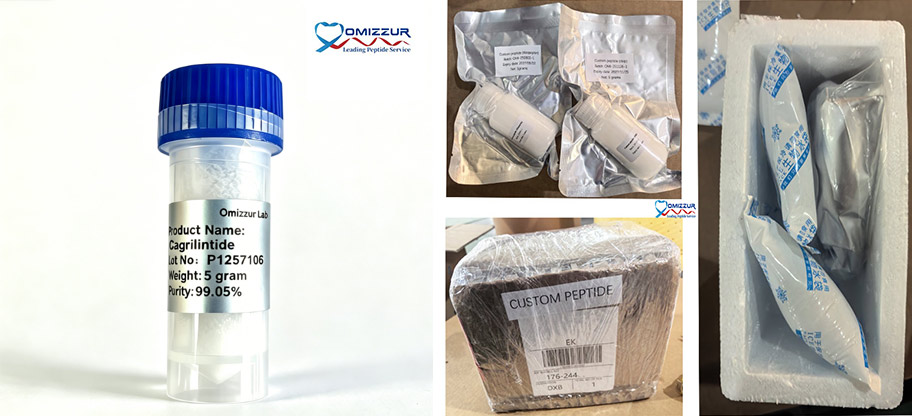
(Omizzur Peptides and research chemicals photos)
4. What impurities exist in non-HPLC purified peptides?
Peptide and non-peptide impurities in crude grade and desalted grade: such as non-full-length peptide and some peptide post-processing raw materials such as DTT and TFA.
5. Why is the synthetic yield or purity of some peptides low?
There is a big difference between peptide synthesis and primer synthesis. There are few primers that cannot be synthesized, but there are often peptides that cannot be synthesized. Because Val, Lle, Tyr, Phe, Trp, Leu, Gln and Thr are orthologous or repeated amino acids, the peptide chain can not be completely dissolved in the synthesis process, and the synthesis efficiency is reduced. Under the following circumstances, the synthesis efficiency and purity of products are relatively low, such as repeated pro, Ser-Ser, repeated ASP, quadruple continuous Gly, etc.
6. How to store synthetic peptides?
Long-term preservation of peptides generally requires dark storage, while short-term preservation should be at -20℃ and 4℃. Peptides can be transported at room temperature for a short time. Peptides are stable at -20℃, especially freeze-dried and stored in dryers.
Freeze-dried peptides can be stored at room temperature before exposure to air. This will reduce the influence of humidity. When freeze-drying is impossible, the best way is to store a small amount of samples.
For peptides containing Cys, Met or Trp, deoxygenated buffer is essential for their dissolution, because these peptides are easily oxidized by air. Nitrogen or argon flowing slowly through the peptide before capping can also reduce oxidation. Peptides containing Gln or Asn are also easy to degrade. Compared with peptides without these problems and simple peptides, all these peptides have limited life.
About Omizzur Peptide

Omizzur has been deeply involved in the field of peptides for more than 15 years, and has developed and accumulated abundant technologies. Omizzur can provide more than 150 kinds of peptide modifications and synthesize more than 10,000 kinds of peptides, and can provide peptides ranging from mg to Kg,Crude to 98% and 2AA-189AA in length, serving nearly 400 scientific research users worldwide.
Click to learn more:
>> Omizzur peptide API catalog
>> Omizzur cosmetic peptides catalog
>> Omizzur custom peptide synthesis services
Copyright © 2020 Omizzur Inc | Terms & Conditions | Privacy Notice | Sitemap


