Peptide Blog - Omizzur
BPC-157 Raw Materials Supply & Manufacturer

BPC-157 is a pentadecapeptide composed of 15 amino acids. In 1993, Sikirić and colleagues first described it in the scientific literature. BPC-157 is derived from a larger molecular-weight cytoprotective complex (BPC) found in human gastric juice, which has protective properties associated with the gastrointestinal tract.
BPC-157 raw material is chemically stable and resistant to enzymatic degradation. Even under harsh conditions such as digestion or enzymatic reactions, it can retain its biological activity.
Basic Chemical Information of BPC-157
CAS No.: 137525-51-0
Common name: BPC‑157, full name Body Protection Compound 157 (Body Protection Peptide 157), aliases Bepecin, gastric juice pentadecapeptide
BPC-157 Amino acid sequence:
One-letter: GEPPPGKPADDAGLV
Three-letter: Gly-Glu-Pro-Pro-Pro-Gly-Lys-Pro-Ala-Asp-Asp-Ala-Gly-Leu-Val
Molecular formula: C62H98N16O22
Molecular weight: 1419.54
Appearance: White to off-white lyophilized powder
Purity specification: Mainstream ≥98% for research reagents (HPLC testing)
Physicochemical Parameters
Melting point>232℃ (decomposition)
Water solubility: Slightly soluble in pure water and dilute buffers; poorly soluble in organic solvents such as methanol
Characteristics: Contains a consecutive three-proline (PPP) structure, resistant to protease degradation, with extremely high stability
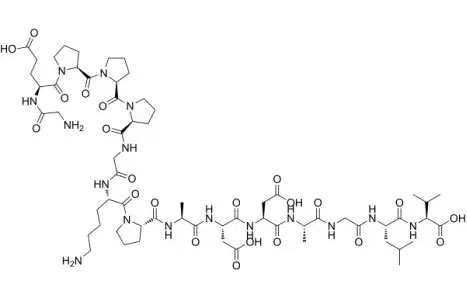
(molecular structural formula of Bpc-157)
Source and Characteristics of BPC-157
BPC‑157 is a proteolytic fragment naturally present in human gastric juice, and this sequence is replicated through artificial solid-phase synthesis.
Core advantage of BPC-157: ordinary peptides are extremely susceptible to degradation by digestive enzymes, but BPC‑157 remains stable in gastric acid and intestinal protease environments, and retains biological activity when administered orally or by subcutaneous injection, making it a rare short peptide that can take effect orally.
Verified Research Pharmacological Directions of BPC-157
1. Gastrointestinal protection (initial development target)
Prevention / treatment of gastric ulcers and duodenal ulcers; relief of reflux and ulcerative colitis
Promotes healing of gastrointestinal anastomoses and fistulas, reduces the risk of perforation; alleviates gastrointestinal mucosal damage caused by chemotherapy drugs.
2. Musculoskeletal injury repair (a popular research direction)
Accelerates the healing of tendons, ligaments, muscles, cartilage, and bones: strains, tears, synovitis, bone contusions, postoperative bone repair, reduces scar fibrosis, improves joint mobility
3. Systemic multi-organ protection
Liver: alleviates drug-induced and alcohol-induced liver injury, promotes hepatocyte repair
Cardiovascular: improves microcirculation, alleviates ischemic tissue injury
Skin: accelerates the healing of wounds, burns, and surgical incisions, reduces the appearance of scars
Nervous system: animal experiments show that it alleviates neuroinflammation and improves peripheral nerve injury.
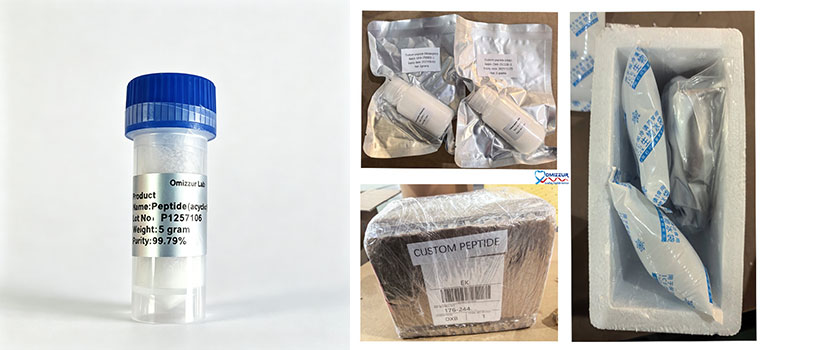
BPC-157 Production & Supply
BPC157 is primarily synthesized through solid-phase peptide synthesis (SPPS), based on the Fmoc (9-fluorenylmethoxycarbonyl) strategy, with the required amino acid units coupled stepwise on a resin support. After synthesis is complete, the product undergoes trifluoroacetic acid cleavage, high-performance liquid chromatography (HPLC) purification, and lyophilization to ultimately obtain a high-purity product.
We recommend that users confirm the purity of the batch before experiments (typically ≥98%), and select an appropriate solvent system according to the specific application scenario—common options include sterile physiological saline, acetate buffer, or an aqueous solution containing a small amount of DMSO. During preparation, vigorous shaking or high-temperature treatment should be avoided to prevent conformational changes or loss of activity.
BPC-157 Raw Material Storage Conditions
Long-term storage of lyophilized powder: sealed, dry, and protected from light at -80℃, with a shelf life of 2 years; can be stored at -20℃ for 1 year
When prepared as an aqueous solution: can be stored at -20℃ for 6 months, while at 4℃ it can only be stored short-term for 3 days, avoiding repeated freeze-thaw cycles that cause degradation
Protect from moisture, and strictly prohibit long-term storage at room temperature
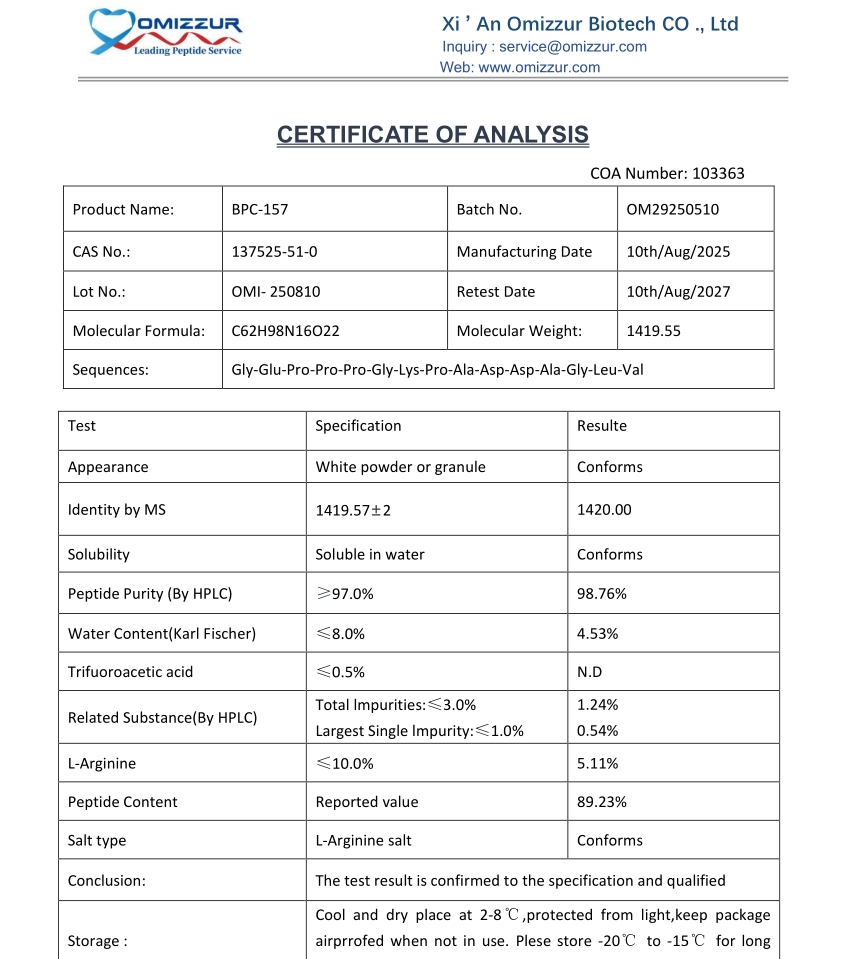
(Coa of Bpc-157 for references)
About Omizzur Ltd
 Omizzur (Omizzur Biotech) was established in 2019. Omizzur is a high-tech biotech peptide company focus on custom peptide synthesis. Omizzur is engaged in the peptide synthesis business of various types of peptides: peptides API, cosmetic peptides, custom peptide synthesis services, antimicrobial peptides, catalog peptides, peptide libraries, etc.
>> Omizur Popular Peptide Products
| Tirzepatide | Retatrutide | Semaglutide | KPV Peptide |
| BPC-157 | TB-500 | DSIP | Kisspeptin-10 |
| MOTS-c | Selank | Semax | Epitalon |
| AOD-9604 | Thymosin Alpha-1 | PT-141 (Bremelanotide) | Dihexa |
Click to learn more:
>> Omizzur peptide API catalog
>> Omizzur cosmetic peptides catalog
>> Omizzur custom peptide synthesis services
Copyright © 2020 Omizzur Inc | Terms & Conditions | Privacy Notice | Sitemap


